
Volkswagen, a long-standing but minor player in India's fiercely competitive automotive sector, is now exploring a strategic partnership with the JSW group, aiming to revitalise its market presence, enhance profitability, and potentially establish India as a key export hub for electric vehicles.

Hyundai Motor India Ltd has become the country's fifth most valuable auto firm by market valuation in its debut trade on Tuesday. Shares of Hyundai Motor India Ltd, the Indian arm of South Korean automaker Hyundai, listed at Rs 1,931, reflecting a decline of 1.47 per cent against the issue price of Rs 1,960 on the BSE earlier in the day. The stock slumped 7.80 per cent to Rs 1,807.05 during the day and finally ended at Rs 1,820.40 apiece, down 7.12 per cent.

The petrol versions of the car are priced between Rs 5,05,000 and Rs 6,66,000.

The National Stock Exchange (NSE) is reportedly planning to launch its much-anticipated initial public offering (IPO), estimated at around Rs 30,000 crore, in September, potentially valuing the exchange at over Rs 5 lakh crore.

The National Stock Exchange marked its stock market debut at the Bombay Stock Exchange on September 24, 2026, with a traditional gong-ringing ceremony.
The National Stock Exchange of India Ltd (NSE) has received regulatory approval from SEBI for its long-awaited Rs 30,000-crore initial public offering (IPO), positioning it to potentially become the country's largest-ever public issue.

National Stock Exchange (NSE) Chairman Srinivas Injeti stated that post-listing, the exchange's duties as a stock trading marketplace and its responsibilities as a commercial entity will see public interest overriding business interests if the two intersect.

India's sedan market is experiencing a notable divergence: affordable entry-level sedans are gaining market share, while midsize sedans are seeing a significant decline as buyers increasingly opt for SUVs in higher price brackets.

The automaker was found to have engaged in anti-competitive practices.

Shares of Hyundai Motor India Ltd, the Indian arm of South Korean automaker Hyundai, on Tuesday made a muted market debut and further fell by nearly 6 per cent against the issue price of Rs 1,960. The stock listed at Rs 1,931, reflecting a decline of 1.47 per cent from the issue price on the BSE. Later, the stock made some recovery and hit a high of Rs 1,968.80, up 0.44 per cent.

The initial public offer of Hyundai Motor India Ltd, the Indian arm of South Korean automaker Hyundai, received an 18 per cent subscription on the first day of bidding on Tuesday. The Rs 27,870 crore initial share sale received bids for 1,77,89,457 shares against 9,97,69,810 shares on offer, as per NSE data. The IPO received over 9 lakh applications on the first day.

Hyundai Motor India and Honda Cars India on Wednesday joined the list of automakers planning to hike prices of vehicles from April, second time this year, to partially offset the impact of rising input costs and higher operational expenses. In a statement Hyundai Motor India Ltd (HMIL) said it will hike prices of its vehicles by up to 3 per cent effective in April 2025.

At the upper end of that range, the bourse would rank among the seven most valuable listed firms in the country.
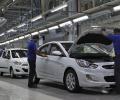
Indian carmakers experienced a robust start to the new fiscal year, with an estimated 4.5 lakh passenger vehicles sold in April, marking a 27 per cent increase year-on-year, attributed to factors like GST 2.0, repo rate cuts, and income tax benefits.

The initial public offer of Hyundai Motor India Ltd, the Indian arm of South Korean automaker Hyundai, got subscribed 2.37 times on the third day of the bidding on Thursday, helped by institutional buyers. This is the largest IPO in the country, surpassing LIC's initial share sale of Rs 21,000 crore. The Rs 27,870 crore initial share sale got bids for 23,63,26,937 shares against 9,97,69,810 shares on offer, translating into 2.37 times subscription, as per NSE data.

Indian passenger vehicle manufacturers are significantly increasing production and stocking dealerships in anticipation of strong festival season demand, with new launches planned and supply bottlenecks being addressed. However, the industry faces potential moderation in growth during the second half of FY27 due to a high base from last year's post-GST surge, commodity inflation, and elevated inventory levels.
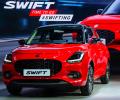
Passenger vehicle sales in India are estimated to have surged by nearly 25 per cent in June 2024, reaching approximately 4 lakh units, with Maruti Suzuki, Tata Motors PV, and Mahindra & Mahindra leading the growth, despite concerns over geopolitical tensions and monsoon impact.

Indian carmakers, including Maruti Suzuki and Kia India, reported robust sales growth in May 2026, with both companies achieving their highest-ever monthly sales despite rising fuel prices. Maruti Suzuki's domestic sales surged to 1,93,535 units, while Kia India recorded 27,586 units, driven by strong demand in mini and compact segments and a shift towards electric and CNG vehicles.

Passenger vehicle sales in India kicked off on a flat note in new fiscal 2024-25 with 3.38 lakh units sold in April, impacted by high base effect and muted demand due to the ongoing general elections. Dispatches of passenger vehicles from manufacturers to dealers were at 338,341 units in April 2024 as compared to 332,468 units in the same month last year, a growth of 1.77 per cent with major players Maruti Suzuki India, Hyundai and Tata Motors reporting marginal growth in their domestic wholesales.

The only other company working on hydrogen cars in India is Toyota Kirloskar Motor.

Lining up its 2030 strategy, Hyundai said it was targeting up to 30 per cent export contribution and over 1.5-fold rise in revenue, to cross the 1 trillion milestone in five years.

India's domestic passenger vehicle sales experienced a robust 24.6 per cent year-on-year increase in June, propelled by favourable government policies like income tax relief and repo rate cuts, alongside resilient rural demand, even as global crude oil prices pose potential cost pressures.

IPO bound HMIL, which is also from South Korea, had faced severe labour unrest for nearly a decade till the realisation -- a worker's union cannot be avoided -- dawned on it.
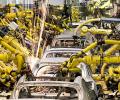
Passenger vehicle sales in India reached a record high of 4.7 million units in FY26, boosted by strong performances from major automakers and the implementation of GST 2.0.

India-EU FTA opens a bigger European market for Indian carmakers while giving European brands greater access to India.

The company further said once the situation was brought to its attention, it made the distributor acutely aware of the "inappropriateness of the action".

VinFast has gone from an unknown brand to India's fifth-largest EV carmaker in just seven months, but its toughest battle is only beginning.

Leading passenger vehicle maker Maruti Suzuki on Saturday reported marginal growth while Hyundai and Tata Motors posted a decline in their sales in February as a slowdown in the market continued with demand remaining muted. On the other hand, Mahindra & Mahindra and Toyota Kirloskar Motor posted double-digit growth riding on their SUV and MPV models.

As there is a moderation in car sales, dealer stock levels across the entire industry have surged to alarming heights. However, the situation is under control at HMIL.

Mexico on Thursday imposed a tariff of up to 50 per cent on imports from its non-preferential trade partners, including India, a move that might hit New Delhi's annual $5.75 billion shipments to its third-largest car export market.

Electric passenger vehicle (PV) retail sales jumped more than twofold in September with Tata Motors (TaMo) leading the pack having over 6,000 registrations and a 40 per cent market share.

The charging infrastructure expansion includes the setup of over 600 DC charging stations by 2030 (including company-owned and company-operated ones) in addition to partnerships with over 10,200 charging points, collaborating with operators like Shell, Charge Zone, and Statiq.

Leading automakers Maruti Suzuki, Tata Motors, Mahindra & Mahindra, and Hyundai Motor India posted higher sales in January riding on the growth momentum ushered in by the GST reforms in the festive period last year.
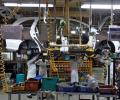
Auto majors Maruti Suzuki India and Hyundai reported muted sales performance in October as the companies curtailed dispatches to dealers in order to cut inventory build up.
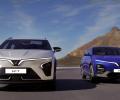
New players like Maruti Suzuki, VinFast, and Tesla are significantly expanding India's electric passenger vehicle (e-PV) market, capturing an 8.1 per cent share and contributing 18 per cent of incremental registrations in the first half of 2026, according to Fada Research data.

Hyundai Motor India expects SUV sales to account for 65 per cent of its overall volumes in 2024, while it gears up to enter the EV segment early next year, aiming to garner 20 per cent of its total sales by 2030, its COO Tarun Garg said on Tuesday. The automaker, which got around 60 per cent of its overall volumes from sports utility vehicle (SUV) sales last year, plans to invest Rs 7,000 crore on its second plant at Talegaon, according to Maharashtra Deputy Chief Minister Devendra Fadnavis. The company officials however declined to comment on the matter.

Maruti Suzuki and Hyundai Motor India on Monday reported a dip in passenger vehicle dispatches to dealers in the domestic market last month as the companies tried to adjust vehicle inventory amid slowing demand. Maruti Suzuki India said it "calibrated supplies" to the dealers, aligning with the industry's retail sales projections amid India-Pakistan conflict and a dip in sales of entry-level cars.

Hyundai Motor India on Thursday said it will invest Rs 20,000 crore in a phased manner in Tamil Nadu over the next ten years to make further inroads into electric vehicles and modernisation of vehicle platforms. The automaker will invest in phases starting in 2023 till 2032. "Hyundai has been one of the largest manufacturers and consistent investors in Tamil Nadu.
Hyundai aims to raise exports to 30% of output by FY30 as domestic sales slow; six EVs among 26 product launches planned as part of long-term growth strategy.

Between April and August this financial year, passenger car exports rose 8.5 per cent year-on-year (Y-o-Y), while domestic sales fell by 8.5 per cent.
